

Top 5 Digital Marketing Channels For Local Businesses
 Smita
Smita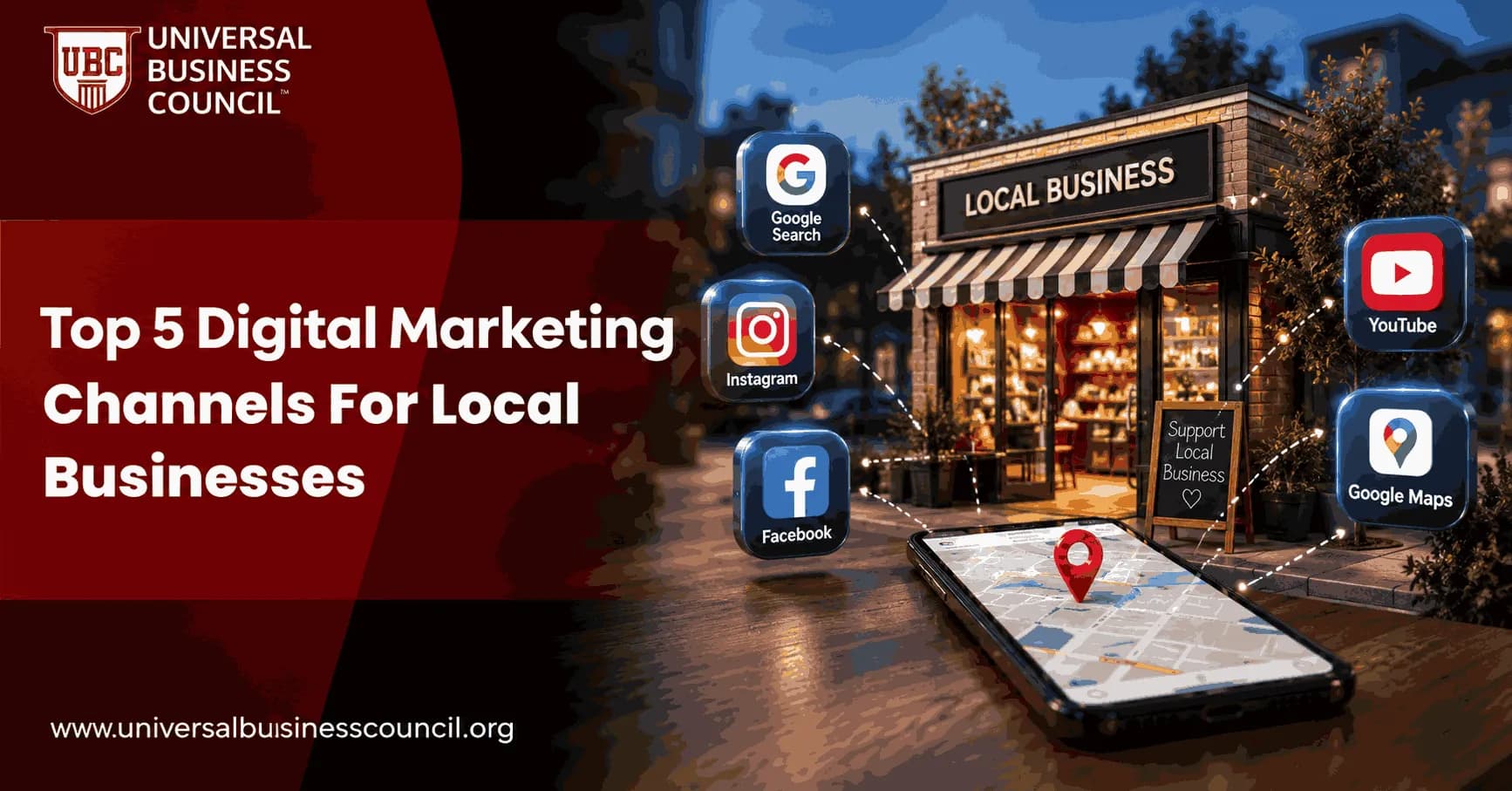
Local businesses face a very different marketing challenge than national brands, since success depends on reaching people within a specific radius rather than casting the widest possible net. A restaurant, dental practice, or home services company does not need millions of impressions across the country, it needs consistent visibility among the few thousand people who might actually walk through the door or pick up the phone. Choosing the right channels matters enormously here, and business owners who invest in structured training, such as earning a Certified Digital Marketing Expert credential, tend to build far more effective local strategies than those relying on scattered guesswork across every platform at once.
Google Business Profile and Local Search
Why This Channel Comes First for Local Visibility
For most local businesses, Google Business Profile delivers more direct impact than any other single channel, since it controls how a business appears when nearby customers search for exactly what they offer. A complete profile with accurate hours, photos, and service categories consistently outperforms sparse or outdated listings in local search results and on Google Maps.

Building Reviews and Local Authority
Customer reviews carry enormous weight in local search rankings and in a potential customer's decision to choose one business over another. Businesses that actively encourage satisfied customers to leave reviews, and respond thoughtfully to both positive and negative feedback, build the kind of local authority that search algorithms and human customers both respond to strongly.
Facebook and Instagram for Community Presence
Social platforms remain genuinely valuable for local businesses, particularly because they let a business build ongoing relationships with the community rather than just capturing one time transactions. Facebook groups tied to specific neighborhoods or interests offer a direct way to reach engaged local audiences, while Instagram works especially well for businesses with a strong visual product like restaurants, salons, or retail shops. Location tagging and geotargeted ads on both platforms let businesses focus their budget specifically on people within a realistic driving distance, avoiding wasted spend on audiences who could never become actual customers.
Local SEO and Content Marketing
Ranking for Searches That Matter Locally
Beyond Google Business Profile, a well optimized website that targets local search terms helps businesses capture customers actively searching for their services online. Location specific landing pages, content that addresses local events or community topics, and consistent business information across directories all contribute to stronger local search rankings over time.
Using AI Tools to Refine Local Content Strategy
Marketers increasingly rely on data driven tools to figure out exactly which local search terms and content topics actually drive foot traffic and phone calls. Professionals pursuing an AI Powered Digital Marketing Expert credential often find genuine value in applying AI assisted tools to analyze local search trends and customer behavior patterns, then adjusting content strategy based on that data rather than assumptions about what local customers want.
Email Marketing for Repeat Customers
Email remains one of the most cost effective channels for local businesses trying to bring past customers back through the door. A simple monthly newsletter announcing promotions, new services, or community involvement keeps a business top of mind without requiring the ongoing budget that paid advertising demands. Segmenting email lists based on past purchase behavior, such as sending different messages to first time visitors versus loyal repeat customers, consistently improves engagement compared to sending the same generic message to an entire list.
Local Paid Advertising and Geotargeting
Paid advertising through Google Ads and social platforms lets local businesses reach highly specific audiences within a defined geographic radius, often producing faster results than organic strategies alone. Understanding how these ad platforms process targeting data and allocate budget across different audience segments requires a real technical foundation, and professionals who pursue a broader Deep Tech Certification often find that understanding how algorithmic ad systems actually function helps them manage local campaigns with far more precision than treating the platform as a black box.
Technology Skills & Education
Schools and parents are increasingly looking for ways to introduce children to technology in a structured and meaningful way. The Tech Olympiad provides an opportunity for students to explore AI, coding, robotics, cybersecurity, and computational thinking while building confidence and problem-solving skills. The same analytical thinking that students develop through this kind of early, structured exposure to technology often becomes exactly the foundation that helps someone later interpret marketing data and make smart, informed decisions about where to invest a local business's limited advertising budget.
Bringing It All Together
No single channel works in isolation for a local business, and the strongest local marketing strategies combine several of these approaches rather than relying on just one. A business that shows up well in local search, maintains an active social presence, and stays in touch with past customers through email consistently outperforms one that puts all its effort into a single channel. Business owners who round out their marketing skills with a broader Tech Certification tend to bring added confidence to this process, since a deeper understanding of the technology behind these platforms helps them troubleshoot issues and interpret performance data with far more clarity. As local competition for customer attention keeps growing, businesses that combine the right mix of channels with real technical understanding are the ones most likely to see steady, sustainable growth.
FAQs
1. What are the best digital marketing channels for local businesses?
The top digital marketing channels for local businesses include local SEO, Google Business Profile, social media marketing, paid advertising, and email marketing. The right combination depends on the business type, target customers, location, budget, and marketing goals.
2. Why is digital marketing important for local businesses?
Digital marketing helps local businesses reach potential customers when they are searching for products, services, or businesses nearby. It can increase online visibility, generate leads, drive store visits, and build long-term customer relationships.
3. What is local SEO and why is it important?
Local SEO is the process of improving a business's online visibility for location-based searches. It helps businesses appear when people search for relevant products or services in a specific area, making it an important channel for attracting nearby customers.
4. How can Google Business Profile help a local business?
Google Business Profile helps businesses manage how their information appears across Google Search and Maps. Businesses can provide details such as their address, phone number, website, hours, photos, services, and customer reviews, making it easier for local customers to discover and contact them.
5. How does social media marketing help local businesses?
Social media allows local businesses to connect with customers, showcase products and services, share updates, build communities, and promote special offers. Location-focused content can also help businesses engage audiences in specific communities.
6. Is Google Ads effective for local businesses?
Google Ads can be effective for local businesses because advertisements can be used to reach people actively searching for relevant products or services. Businesses can structure campaigns around locations, keywords, services, and specific marketing objectives.
7. How can paid advertising generate local leads?
Paid advertising can place a business in front of relevant audiences based on factors such as search intent, location, interests, and demographics, depending on the advertising platform. Sending users to focused landing pages with clear calls to action can improve lead-generation opportunities.
8. Why is email marketing useful for local businesses?
Email marketing allows local businesses to maintain relationships with existing and potential customers. Newsletters, promotions, event announcements, personalized offers, and follow-up messages can encourage repeat purchases and ongoing engagement.
9. Which digital marketing channel is best for local businesses?
There is no single best channel for every local business. Local SEO is often valuable for capturing people actively searching for nearby solutions, while social media, paid advertising, and email marketing can support awareness, customer engagement, lead generation, and retention.
10. How can local SEO increase website traffic?
Optimizing a website for relevant local searches can help it appear in search results when nearby customers look for related products or services. Location-specific pages, relevant content, accurate business information, and strong local signals can support local search visibility.
11. How can online reviews support local marketing?
Online reviews can influence how potential customers evaluate a local business. Encouraging genuine customer feedback, responding professionally to reviews, and maintaining consistent service quality can strengthen credibility and help potential customers make informed decisions.
12. How can content marketing help a local business?
Content marketing can answer customer questions, demonstrate expertise, and provide useful information related to local needs. Blog posts, guides, videos, FAQs, and local resources can support search visibility while helping potential customers understand a business's products or services.
13. Should local businesses use social media ads?
Social media advertising can be useful when a business wants to reach a defined local audience. Campaigns can promote products, events, offers, services, or lead-generation opportunities while targeting users according to the options available on the chosen platform.
14. How can businesses combine different digital marketing channels?
Businesses can create an integrated strategy in which each channel supports the others. For example, local SEO can capture search demand, social media can build awareness, paid advertising can generate immediate visibility, and email marketing can nurture existing customers.
15. How important is mobile marketing for local businesses?
Mobile marketing is highly relevant because customers often use smartphones to search for nearby businesses, directions, opening hours, products, and services. Local businesses should ensure that their websites and digital experiences work well on mobile devices.
16. How can local businesses use video marketing?
Local businesses can use videos to demonstrate products, introduce employees, answer frequently asked questions, showcase customer experiences, provide tutorials, or highlight local events. Short, useful videos can be distributed through websites and social media platforms.
17. What digital marketing channel is best for attracting customers ready to buy?
Search-based marketing, particularly local SEO and relevant paid search campaigns, can be effective for reaching customers who already have purchase intent. These channels allow businesses to appear when users actively search for solutions they need.
18. How should local businesses measure digital marketing success?
Businesses should track metrics connected to their goals, such as website traffic, calls, direction requests, leads, bookings, purchases, conversion rates, customer acquisition costs, and repeat purchases. Measuring outcomes rather than vanity metrics provides a clearer picture of marketing performance.
19. What are common digital marketing mistakes local businesses should avoid?
Common mistakes include having inaccurate business information, ignoring online reviews, targeting audiences too broadly, posting inconsistently, using outdated website content, and failing to track conversions. Businesses should focus on accurate information, relevant content, consistent engagement, and measurable objectives.
20. What are the top five digital marketing channels for local businesses?
The five key channels are local SEO, Google Business Profile, social media marketing, paid advertising, and email marketing. Together, they can help local businesses improve visibility, reach nearby customers, generate leads, increase sales, and maintain long-term customer relationships.
Related Articles
View AllDigital Marketing
KPIs for Digital Marketing Campaigns in Programmatic Advertising
Learn how to choose KPIs for digital marketing campaigns using programmatic advertising, from reach and CTR to CPA, ROAS, CAC, and revenue impact.
Digital Marketing
How AI and Automation Power Programmatic Advertising in Modern Digital Marketing
AI now drives programmatic advertising through automated bidding, targeting, creative optimization, privacy-safe identity, and cross-channel measurement.
Digital Marketing
Building a Full-Funnel Digital Marketing Strategy with Programmatic Advertising
Learn how to build a full-funnel digital marketing strategy with programmatic advertising across awareness, consideration, conversion, and retention.
Trending Articles
The Role of Blockchain in Ethical AI Development
How blockchain technology is being used to promote transparency and accountability in artificial intelligence systems.
AWS Career Roadmap
A step-by-step guide to building a successful career in Amazon Web Services cloud computing.
Top 5 DeFi Platforms
Explore the leading decentralized finance platforms and what makes each one unique in the evolving DeFi landscape.